















































DronePilotsAruba.com · Practical guides
Writing an aerial photography or video brief that operators can quote
Published 5 November 2026

A useful brief explains the business result, not just a wish to fly a drone. Give operators enough information to assess feasibility, permissions, creative scope and a realistic handover.
Describe the purpose and audience
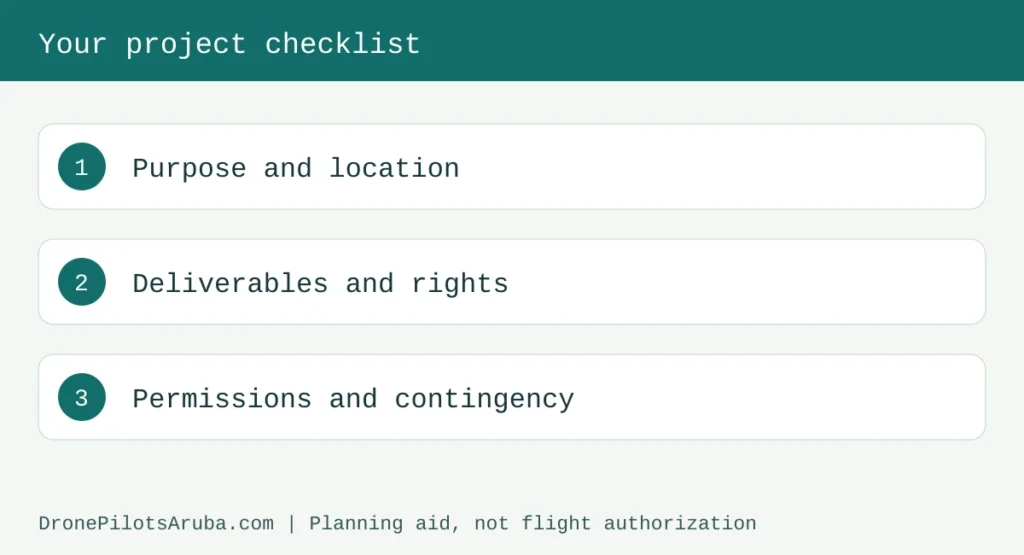
Start with one sentence about what the audience should understand or do after seeing the images. A property overview may need context and clear orientation; a brand film may need a short sequence that works with existing ground footage. State where the result will appear: a website, social channel, presentation or print piece. Include required aspect ratios, approximate final length and any accessibility needs such as captions. These choices help a provider propose appropriate capture and editing without guessing what a cinematic result means to you.
Give exact locations without promising access
Supply the proposed address or meeting point, intended date window and the person who can answer property-access questions. Distinguish places you own from places where you still need consent. Do not write permission confirmed unless it really is, with a relevant written record. The Aruba Airport Authority regulations illustrate why site-specific access and filming conditions matter on airport premises. Let the operator assess applicable aviation requirements separately. A venue reservation, equipment-registration form or nearby hotel booking is not a substitute for authorization to conduct a flight.
Build a short, prioritized shot list
List the essential subject and intended use of each shot, then mark optional ideas. Explain what must not be shown: neighbouring private areas, identifiable people, sensitive equipment or confidential operations. Avoid prescribing an unsafe approach, altitude or flight path. Ask the operator to suggest a feasible method and alternatives. Share reference images only when you have the right to use them and label them as style references, not promised views. If a specific angle cannot be captured, agree on which business objective an alternative image should still achieve.
Specify the actual files and rights
Agree the number of final images or clips, resolution, file formats, editing, music responsibilities and revision rounds. Decide whether raw material is included and how long it will be retained. State the channels, duration and territory of your intended use so the licence can match the project. If another editor will finish the work, confirm the technical handover directly between them and the operator. Our usage-rights guide separates a delivered file from permission to publish or sublicense it. Do not assume a download link transfers every intellectual-property right.
Agree a decision and cancellation process
Name one person who can approve creative changes and confirm how quickly feedback is needed. Ask what happens if weather, site access or permissions prevent the planned capture. Record rescheduling, travel, extra editing and cancellation terms before paying a provider directly. This site does not take bookings or payments. Use the service categories to identify the kind of provider you need, then compare written proposals against the same brief. A realistic scope includes a safe no-flight outcome; a promise that every requested shot will happen is not evidence of a stronger service.